Greenpeppersoftware

Deep dives into software, hardware, and the ideas reshaping how we build things.

Container Orchestration Reality Check: Beyond the Hype of Modern Platform Engineering

The Kubernetes Monopoly Problem

Let’s talk about the elephant in the room. When 84 percent of organizations running containers have standardized on Kubernetes, we’re not looking at healthy competition anymore. We’re looking at market consolidation that honestly makes me uncomfortable as a technologist. This near-universal adoption doesn’t automatically mean Kubernetes is the best solution for every use case.
Container Orchestration Reality Check: Beyond the Hype of Modern Platform Engineering

The complexity overhead of Kubernetes is massive, no matter what the evangelists say. Organizations are trading one set of operational headaches for another, often more complicated set. The Kubernetes documentation runs thousands of pages for good reason. This isn’t simplification. It’s abstraction with a brutal learning curve.

The momentum feels unstoppable. Network effects are real, and the ecosystem naturally gravitates toward the dominant player. But here’s the thing: dominant doesn’t mean optimal. Widespread adoption doesn’t magically eliminate the fundamental architectural trade-offs that many organizations are just starting to understand.
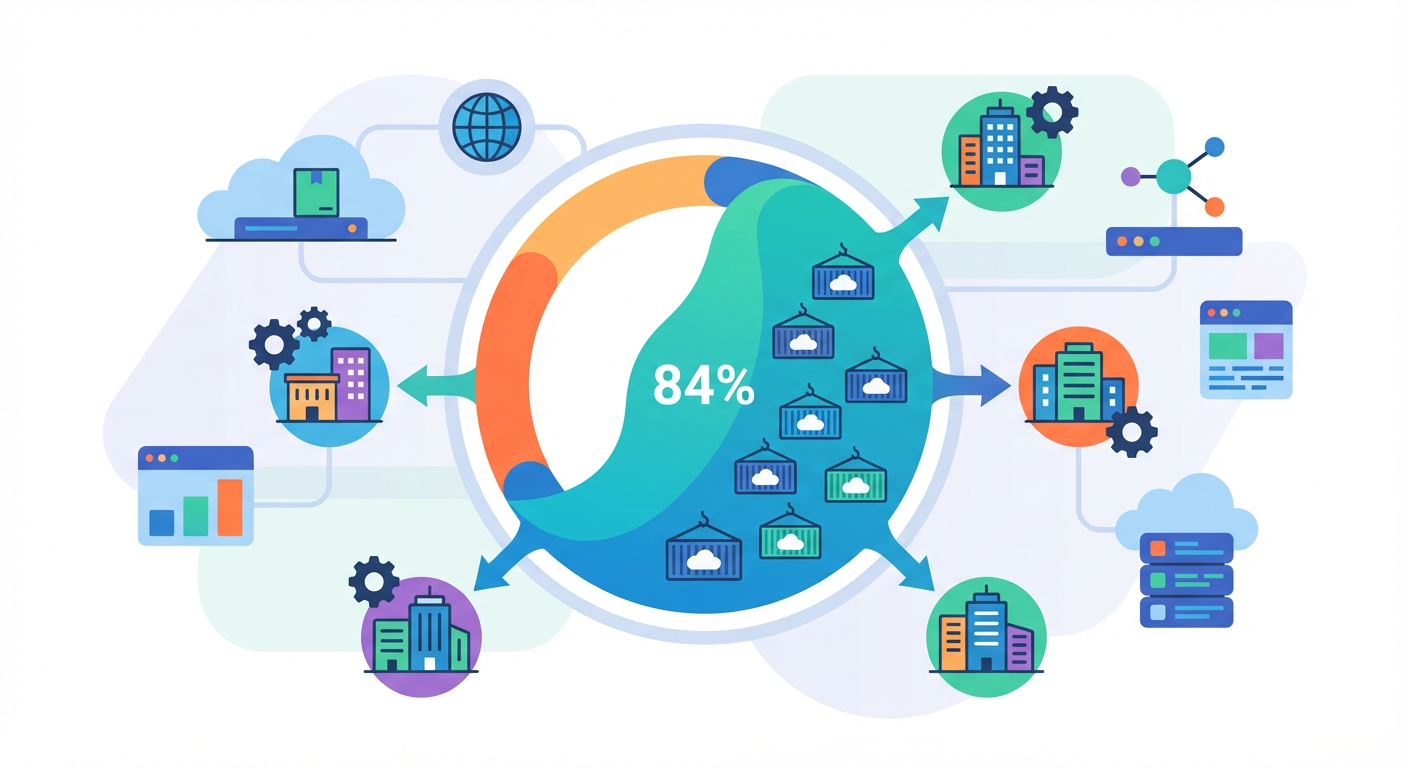
Illustration for Container Orchestration Reality Check: Beyond the Hype of Modern Platform Engineering

Docker’s Licensing Gambit and Developer Inertia

The Docker Desktop licensing controversy was supposed to shake things up. But developer usage patterns? Remarkably stable. This tells us something important about developer tooling: switching costs often matter more than licensing costs, especially when corporate budgets absorb those fees instead of individual developers.

The licensing controversy made plenty of noise. Alternatives like Podman and containerd got attention. But actual migration numbers tell a different story. Most developers stick with familiar tools until someone forces them to change. Organizations found it easier to pay Docker than retrain their teams.

This pattern reveals a bigger issue in containerization. Tool selection increasingly depends on familiarity and ecosystem lock-in rather than technical merit. When switching costs are high, market leaders can extract more value without delivering proportional improvements. It’s frustrating, but it’s reality.

Platform Engineering: Abstraction or Complexity Theater?

Platform engineering teams are either a necessary evolution or an admission of failure. Depends on how you look at it. These teams are supposed to abstract infrastructure complexity away from application developers. The real question is whether they’re solving the right problem or just moving complexity around.

Platform engineering promises to democratize infrastructure access while maintaining operational standards. In practice, it often creates new bottlenecks and communication overhead between application teams and the underlying infrastructure. Those abstraction layers can become black boxes that hide system behavior instead of clarifying it.

The growth of these specialized teams makes me wonder about organizational efficiency. Are we creating more specialized roles because our tools are too complex? Or are we finally organizing around sustainable operational practices? The answer varies between organizations, but the trend suggests infrastructure complexity has outpaced most teams’ ability to manage it directly.

eBPF and WebAssembly: Signal Through the Noise

Extended Berkeley Packet Filter technology actually deserves attention beyond the typical hype cycle. eBPF’s ability to enable deep observability without code instrumentation is a genuine technical advancement. Operating at the kernel level, it provides insights that traditional monitoring approaches simply can’t match.

But eBPF adoption requires kernel-level expertise that most development teams don’t have. The promise of seamless observability comes with the reality of specialized knowledge requirements. Organizations need to invest in education or hire specialists to get real value from eBPF.

WebAssembly’s expansion beyond browsers into server-side workloads is interesting. The technology offers near-native performance with sandboxed execution, addressing legitimate concerns about security and resource isolation. But WebAssembly also introduces new complexity in toolchain management and debugging workflows.

Both technologies represent real innovations rather than marketing-driven trends. However, adopting them requires careful consideration of organizational capability and genuine need rather than FOMO about the latest developments.

GitOps: From Practice to Orthodoxy

GitOps has achieved something rare: it became standard practice without significant technical controversy. Organizations with mature DevOps cultures have largely adopted Git-centric deployment workflows, and the results generally justify the investment.

The appeal is straightforward. Treating infrastructure and application configuration as code provides versioning, rollback capabilities, and audit trails that traditional deployment methods can’t match. GitOps workflows align naturally with existing developer practices, reducing the mental overhead of deployment management.

But the uniformity of GitOps adoption across mature organizations suggests limited experimentation with alternative approaches. While GitOps solves real problems effectively, the lack of diversity in deployment methodologies might indicate premature convergence on a single pattern. The CNCF landscape shows numerous GitOps implementations, but they largely follow the same fundamental patterns.

GitOps standardization reflects broader maturation in the containerization space, but it also raises questions about whether the industry has adequately explored alternative deployment paradigms. Sometimes consensus emerges from thorough evaluation. Sometimes it emerges from path dependence and risk aversion.

These trends in containerization and platform engineering reflect both genuine technological progress and the natural tendency of complex systems to accumulate layers of abstraction. The challenge for technical decision-makers is distinguishing between solutions that address fundamental problems and those that simply reorganize existing complexity into new configurations. What’s your organization’s experience with these patterns?


Core Web Vitals in 2026: The Performance Metrics That Make or Break Your Site

Why Core Web Vitals Still Matter More Than Ever

Google’s integration of Core Web Vitals into its ranking algorithm in 2021 changed everything about how search engines think about user experience. Five years later, these performance metrics aren’t just nice-to-have optimizations anymore. They’re requirements if you want to compete.

Core Web Vitals in 2026: The Performance Metrics That Make or Break Your Site

The stakes are higher now. What started as Google politely suggesting we optimize performance has become hard thresholds. Sites that miss the mark get hit with real ranking penalties. Sites that nail it see actual gains in organic traffic.

And honestly? Users expect fast everything now, regardless of device or connection speed. But web apps keep getting more complex, creating this constant tension between cool features and quick loading times.

The Current Metric Landscape and Recent Changes

The three Core Web Vitals have gotten much stricter since they launched. Largest Contentful Paint (LCP) is still the main loading performance metric, but the bar is way higher. Today you need to hit under 2.5 seconds to stay competitive, and the best sites are loading well under 2 seconds.

The biggest change happened in March 2024 when Google replaced First Input Delay with Interaction to Next Paint. This switch made sense because measuring just the delay before processing starts only tells half the story. INP captures what users actually experience when they click or tap something, from start to finish.

Cumulative Layout Shift is still the metric that keeps your page from jumping around, but it’s gotten more important as sites rely more on dynamic content. Those annoying layout shifts hit your rankings harder now, especially on mobile where every pixel counts.

Edge Computing’s Performance Revolution

Edge computing platforms like Cloudflare Workers and Vercel’s Edge Functions have completely changed how we think about performance optimization. Now you can run code milliseconds away from your users instead of making them wait for round trips to distant servers.

This solves one of web performance’s biggest headaches: latency across continents. Old-school CDNs could only cache static files, but modern edge platforms actually execute code closer to users. The speed difference is dramatic.

It goes beyond just speed, though. Edge computing lets you do sophisticated stuff like personalized content delivery and real-time A/B testing without the performance hit you’d normally get from centralized processing. Smart routing automatically sends requests to the best edge location based on current load and distance.

The downside? Debugging edge functions is a pain. Performance issues can pop up from inefficient edge code or weird data fetching patterns that weren’t even considerations with traditional server setups.

Next-Generation Image Formats and Asset Optimization

Image format evolution has been huge for web performance. AVIF is the clear winner for photos, cutting file sizes up to 50 percent compared to JPEG while looking better. WebP is still the solid fallback when you need broader browser support.

But format choice is just the beginning. Smart optimization now uses Container Queries and advanced srcset configurations to deliver exactly the right image size for each viewing situation. No more mobile devices downloading massive desktop images.

Lazy loading went from requiring JavaScript libraries to being built into browsers, though the implementation details still separate decent performance from excellent performance. Intersection Observer optimizations and loading priority hints give you precise control over when resources load.

AI-powered image compression tools have gotten really good at automatically optimizing images without manual tweaking. They analyze each image to apply the best compression settings, though you still need to double-check that your important brand imagery doesn’t get mangled.

JavaScript: The Persistent Performance Bottleneck

Here’s the frustrating truth: after years of better tools and optimization frameworks, bloated JavaScript bundles are still the main reason sites fail Core Web Vitals. Modern apps regularly ship hundreds of kilobytes of JavaScript that has to run before users can actually do anything.

The problem builds up throughout development. Frameworks push component-heavy architectures that create massive dependency trees. Build tools try to help but often can’t eliminate unused code effectively. You end up shipping tons of dead code to production.

Tree shaking and code splitting help, but they require deep understanding of how your modules connect to each other. Good splitting strategies consider loading priorities and user behavior patterns, not just bundle size. You need to analyze which JavaScript absolutely must run immediately versus what can wait until after the page renders.

Server-side rendering and static site generation move some execution from client to build time, but hydration costs often cancel out the gains. This is especially true for highly interactive apps. Progressive hydration and island architectures offer smarter approaches that balance interactivity with performance.

Tools like web.dev performance guidance and PageSpeed Insights keep getting better at helping developers spot and fix JavaScript performance issues. But you still need to plan your architecture carefully from day one.

The 2026 performance landscape rewards methodical thinking and constant measurement. As Core Web Vitals become more sophisticated benchmarking tools, the sites that succeed treat performance as a core design constraint, not something to fix later. What specific performance challenges are you dealing with in your current projects?

The Silent Crisis Powering Your Digital Life

The Invisible Foundation

Your smartphone works. Your bank processes transactions. Netflix streams without buffering. Behind this smooth digital experience lies an uncomfortable truth: pretty much everything depends on software maintained by volunteers in their spare time.

More than 96 percent of the world’s top one million web servers run on Linux. This isn’t some niche statistic. These machines process your search queries, handle your financial transactions, and store your photos. The operating system powering this infrastructure was built by thousands of contributors, many getting nothing beyond recognition from peers.

Apache web servers, Nginx load balancers, and PostgreSQL databases generate billions in enterprise revenue for companies like Amazon, Google, and Microsoft. Yet the core maintainers of these projects often struggle to fund basic development needs. This isn’t sustainable engineering. It’s digital feudalism.

The Burnout Epidemic

Open source maintainer burnout has hit crisis levels. Key contributors walk away from projects that support entire industries, leaving security vulnerabilities unpatched and features undeveloped. The Open Source Initiative documents case after case of essential projects abandoned when maintainers burn out from unpaid labor.

Corporate response has been reactive rather than proactive. GitHub’s sponsors program has distributed over $30 million to maintainers, but this is a fraction of the value these projects create. Companies that build billion-dollar businesses on open source foundations often contribute nothing back to the communities that make their success possible.

The math doesn’t work. A single developer maintaining a library used by millions of applications cannot scale indefinitely. When they inevitably burn out, the entire ecosystem suffers. Security patches get delayed. New features stagnate. Dependencies become liability time bombs.

Regulatory Pressure and New Liabilities

The European Union’s Cyber Resilience Act introduces unprecedented liability requirements for software providers, including open source projects. Maintainers who previously operated under informal community norms now face potential legal consequences for security vulnerabilities.

This regulatory shift forces a reckoning. Projects that handle sensitive data or support infrastructure can no longer operate as hobby endeavors. They need professional development practices, security audits, and legal compliance frameworks. These requirements cost money that most projects don’t have.

The legislation aims to improve software security, but its practical effect may eliminate many smaller open source projects. Maintainers cannot absorb legal liability for software they distribute freely. Expect consolidation as smaller projects shut down rather than navigate complex regulatory requirements.

Evolution in Critical Systems

The transition from C to Rust in safety-critical systems signals a broader transformation in open source infrastructure. Linux kernel developers increasingly adopt Rust for new components, while Amazon Web Services replaces C implementations with memory-safe alternatives.

This shift reflects growing awareness that traditional approaches to systems programming introduce unacceptable risks. Buffer overflows and memory corruption vulnerabilities plague C codebases, creating attack surfaces in infrastructure. Rust’s compile-time memory safety guarantees eliminate entire categories of bugs.

However, this transition creates new dependencies and complexity. Rust toolchains require different expertise than C development. Projects must retrain contributors or recruit new talent. The GitHub Open Source community shows growing Rust adoption, but migration costs remain significant for established projects.

Language evolution also fragments the contributor base. Developers skilled in C may not transition to Rust, reducing the pool of qualified maintainers for projects. This expertise gap compounds existing sustainability challenges.

The Path Forward

Open source sustainability requires systemic change, not charitable gestures. Companies that profit from open source infrastructure must fund development proportional to their usage. This means moving beyond GitHub stars and occasional donations to structured support for maintainer salaries, security audits, and project governance.

Professional support structures need to emerge around projects. The current model of volunteer maintainers managing enterprise software is fundamentally broken. Organizations like foundations and consortiums can provide governance frameworks, but they require sustained funding from beneficiary companies.

Regulatory compliance will force professionalization whether we plan for it or not. Projects can either evolve proactively with proper funding and governance, or they can disappear when maintainers cannot handle new liability requirements. The choice belongs to the companies that depend on this infrastructure.

The next decade will determine whether open source remains a sustainable model for infrastructure. The warning signs are clear. The question is whether the industry will respond before the foundation crumbles. What’s your organization doing to support the projects it depends on?

The Cloud Cost Revolution: How FinOps Maturity Will Transform Enterprise Spending in 2025

The $100 Billion Cloud Waste Problem

Enterprise cloud spending will hit record heights in 2025, but nearly one-third of that investment will vanish into digital thin air. Industry analysts project that cloud waste will eat up roughly 32 percent of total cloud spending next year—that’s over $100 billion in wasted resources across global enterprises.

This isn’t just some abstract statistic. It shows a basic problem with how organizations think about cloud economics. The era of “lift and shift everything” is crashing into economic reality. CFOs want accountability. Engineering teams are scrambling for visibility. The result? A perfect storm that’s rapidly pushing Financial Operations, or FinOps, into the spotlight.

The waste isn’t spread evenly across cloud services. Compute resources take the biggest hit, with over-provisioned virtual machines running at 15 percent utilization rates. Storage costs spiral upward through poor data lifecycle management. Network charges pile up through badly designed inter-service communication. These patterns are predictable, measurable, and fixable—if you know what to look for.

FinOps Goes Mainstream

The FinOps Foundation has seen explosive growth, with membership expanding by 200 percent over just two years. This surge isn’t just trend-chasing. It reflects a hard truth: cloud cost management requires dedicated discipline, specialized tooling, and teams that actually talk to each other.

Organizations are learning that FinOps maturity follows a predictable path. Stage one involves basic cost visibility and panic responses to billing surprises. Stage two introduces some governance through budgets, alerts, and approval workflows. Stage three achieves real optimization through automated rightsizing, committed use discounts, and workload-aware scheduling.

The most advanced organizations reach stage four: predictive cost modeling that connects with business planning. These companies treat cloud spending as a strategic lever, not just another line item. They forecast infrastructure needs based on product roadmaps. They model cost impacts during architecture reviews. They optimize for total cost of ownership, not just monthly sticker shock.

Smart Purchasing Strategies Drive Immediate Savings

Smart enterprises are using committed use agreements to slash costs. Reserved instances and savings plans are delivering 40 to 60 percent bill reductions for predictable workloads. These aren’t small improvements—they’re fundamental changes to cloud economics that hit the bottom line hard.

The trick is workload classification and commitment matching. Baseline production systems with steady resource requirements become perfect candidates for three-year reserved capacity. Development and testing environments work well with one-year commitments and convertible options. Dynamic workloads stay on-demand for maximum flexibility.

Spot and preemptible instances are changing machine learning operations completely. Most ML training workloads now run on interruptible compute, achieving 70 to 90 percent cost savings compared to on-demand pricing. Advanced orchestration platforms handle interruptions smoothly through checkpointing and automatic restart mechanisms. This approach requires some architectural sophistication but delivers incredible economic efficiency.

Sophisticated organizations are building layered commitment strategies. They use reserved instances for baseline capacity, utilize savings plans for variable growth, and supplement with spot instances for burst workloads. Tools like AWS Cost Explorer provide the analytics foundation for continuously optimizing these purchasing decisions.

Multi-Cloud Complexity Creates New Challenges

Multi-cloud adoption is speeding up, driven by vendor diversification strategies and best-of-breed service selection. Organizations are discovering that different cloud providers excel in different areas. AWS dominates in breadth and maturity. Google Cloud leads in data analytics and machine learning. Microsoft Azure plays nicely with enterprise software stacks.

But multi-cloud strategies introduce operational complexity that directly impacts cost management. Each provider uses different pricing models, discount structures, and billing cycles. Cost allocation becomes exponentially harder when workloads span multiple platforms. Governance policies must account for provider-specific quirks while maintaining consistent standards.

The solution involves platform-agnostic FinOps tooling and standardized cost allocation methodologies. Leading organizations are investing in unified cost management platforms that normalize billing data across providers. They’re implementing shared tagging strategies that work across AWS, Azure, and Google Cloud. They’re building cost models that abstract away provider-specific pricing complexities.

Serverless Architecture Eliminates Idle Waste

Serverless computing is the ultimate expression of pay-per-use cloud economics. Event-driven architectures powered by functions, containers, and managed services eliminate idle resource waste for sporadic workloads. Organizations are seeing 60 to 80 percent cost reductions when migrating appropriate workloads to serverless platforms.

The transformation goes beyond simple function-as-a-service implementations. Modern serverless architectures combine AWS Lambda with API Gateway, DynamoDB, and S3 for complete application stacks. Google Cloud Functions integrate with Pub/Sub and Firestore for real-time data processing. Azure Functions connect with Logic Apps and Cosmos DB for workflow automation.

Success requires rethinking application architecture around event-driven patterns. Monolithic applications must break down into smaller, stateless functions. Data storage moves from persistent databases to managed services with automatic scaling. Authentication shifts from session-based to token-based models. These changes require significant engineering investment but deliver compelling economic returns.

The Road Ahead

Cloud cost optimization is evolving from reactive expense management to proactive business enablement. Organizations that master FinOps principles today will gain competitive advantages that compound over time. They’ll deploy new services faster because cost implications are understood upfront. They’ll scale more efficiently because resource allocation follows data-driven policies. They’ll innovate more boldly because cloud economics support experimentation rather than constrain it.

Success belongs to organizations that treat cloud spending as a strategic capability, not just an operational expense. As cloud services continue expanding and pricing models grow more complex, FinOps maturity will separate industry leaders from followers. The question isn’t whether your organization needs FinOps discipline. The question is how quickly you can develop it.

The Deep Cut Explainer: Open source software sustaining modern infrastructure

The question worth asking about open source software sustaining modern infrastructure is not the one most coverage asks. The evidence, examined carefully, tells a more specific story. The more useful question, the one with real analytical leverage, is why the current situation exists at all.

The data worth focusing on is not the headline number. What matters is that Apache, Nginx, and PostgreSQL underpin billions in enterprise revenue. The methodical read of the situation is also the more accurate one once you examine what the evidence actually shows.

The Deep Cut Explainer: Open source software sustaining modern infrastructure

The Education: Setting the Terms

Linux powers over 96 percent of the world’s top 1 million web servers. This is not just a data point in the story of open source software sustaining modern infrastructure. It is the structural condition that makes everything else in this analysis legible. Context like this doesn’t age quickly. The conditions that produced it have been building for years, and the convergence is what makes the current moment distinct from previous moments that looked similar from a distance.

Apache, Nginx, and PostgreSQL underpin billions in enterprise revenue.

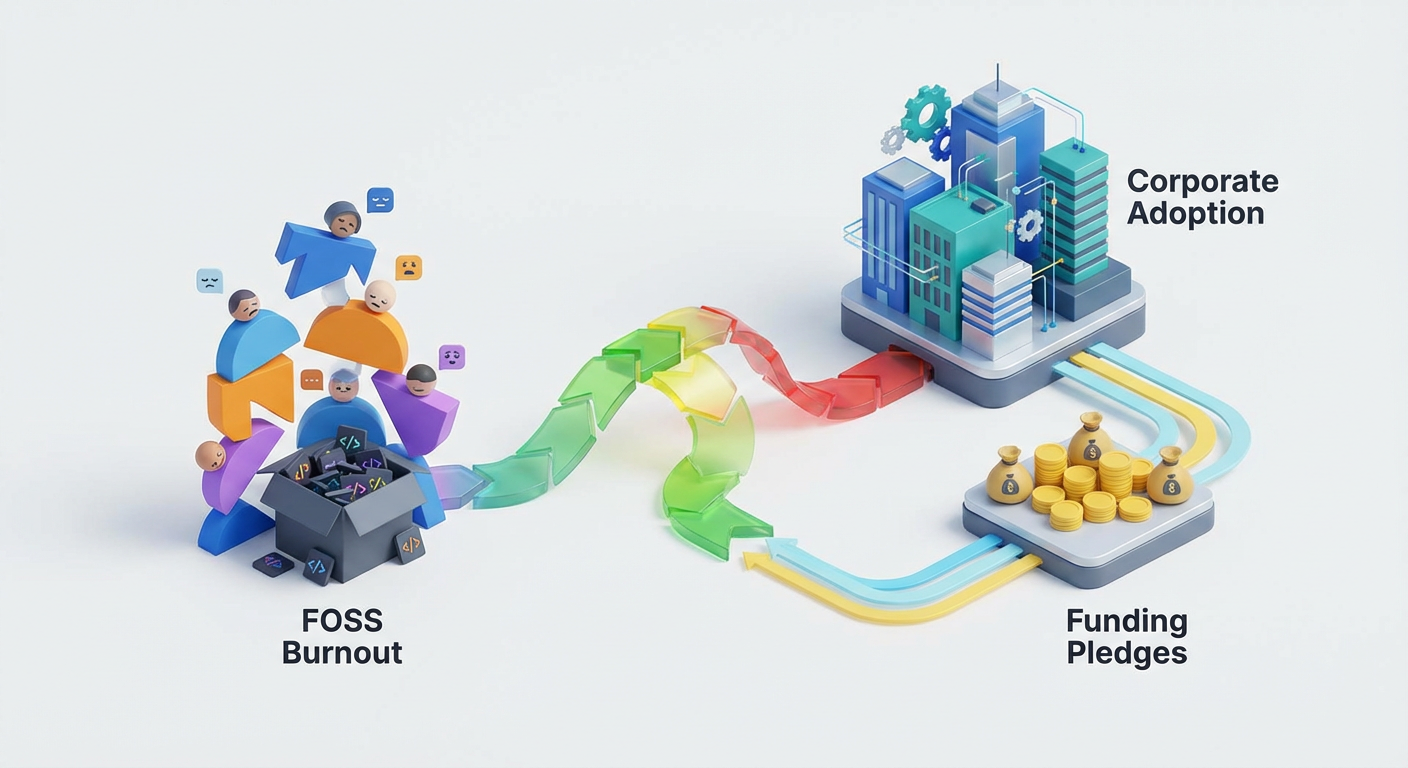
FOSS burnout is forcing corporate adoption programs and funding pledges. The Open Source Initiative has been tracking this dimension consistently.

What makes this moment worth examining carefully is not the novelty but the confirmation. The underlying dynamics have been visible for some time. What’s new is that they have reached a threshold where ignoring them requires active effort rather than simple inattention. That threshold crossing is the event, not the underlying movement that produced it.

The GitHub sponsors program paid out over $30 million to maintainers. This is part of that same picture. These elements don’t exist in separate silos. They’re reinforcing conditions in the same structural shift.

The Deep Cut Explainer: The Analysis

The GitHub sponsors program paying out over $30 million to maintainers is where the analysis gets more specific. The surface reading is accessible and not wrong, but it misses the mechanism. And the mechanism is where the practical insight lives. What’s worth focusing on is not the headline number but the mechanism: the EU Cyber Resilience Act putting new liability pressure on open source projects. Understanding it changes what you do with the information.

Rust is replacing C in safety-critical systems across Linux kernel and AWS.

The skeptical counterargument deserves honest engagement. Prior moments with similar surface characteristics did not produce the outcomes that seemed logical at the time. That history is real. What’s different now is Rust replacing C in safety-critical systems across Linux kernel and AWS. This is not a minor variable. It’s the infrastructure condition that previous cycles lacked. Infrastructure changes tend to be persistent in ways that sentiment-driven changes are not. GitHub Open Source is one source tracking this dimension with the rigor it requires.

There’s also a distributional question that often goes unaddressed in coverage of open source software sustaining modern infrastructure: who captures the value created by these shifts, and who absorbs the disruption costs? The aggregate picture can be positive while the distribution is uneven in ways that matter enormously to specific participants. Keeping that distributional lens in view is part of reading the situation clearly rather than simply optimistically.

Implications: What This Means If You Care About Internals of common tools

The implications of open source software sustaining modern infrastructure extend beyond the immediate context. Linux powers over 96 percent of the world’s top 1 million web servers combined with the structural conditions described above creates a situation where adjacent fields, decisions, and communities are affected in ways that are not always visible from inside the primary story. The second-order effects are frequently more important than the first-order ones. They’re where careful attention pays the highest returns.

The calm authority in the room.

The practical question is not whether to engage with these dynamics but how. The answer depends on context, on what role you occupy relative to open source software sustaining modern infrastructure and what your actual decision horizon is. But the first step is the same regardless: accurate understanding of what’s actually happening rather than what the most available narrative says is happening.

A few concrete observations are worth separating out from the broader analysis. First: Apache, Nginx, and PostgreSQL underpinning billions in enterprise revenue is not a temporary condition. It’s a new baseline. Second: the EU Cyber Resilience Act putting new liability pressure on open source projects suggests that the adjustment period is not over. Third, and most important: the organizations and individuals who are treating the current moment as a new steady state rather than a transition are making a categorization error that will be costly to unwind later.

The Case Against: What the Critics Get Right

Intellectual honesty requires acknowledging the strongest counterarguments, not just the weakest ones. The case against the optimistic reading of open source software sustaining modern infrastructure is not trivial. There are structural vulnerabilities in the current picture that deserve direct engagement rather than dismissal.

The most serious objection is the one about sustainability. FOSS burnout forcing corporate adoption programs and funding pledges can be read not as a foundation but as a ceiling. A point beyond which growth becomes self-limiting because of the very dynamics that produced it. If the current state has already incorporated most of the available supply of early-adopting participants, the remaining growth curve may be structurally shallower than the recent trajectory implies.

Rust is replacing C in safety-critical systems across Linux kernel and AWS.

Looking Forward

The trajectory here is clearer than the pace. Making predictions about when specific thresholds will be crossed is genuinely difficult. Anyone claiming precision about timelines should be treated with skepticism. But the direction toward Linux powering over 96 percent of the world’s web servers and continued development of the conditions described above is supported by the evidence in a way that’s not contingent on a single variable going right.

Rust replacing C in safety-critical systems across Linux kernel and AWS is the variable to watch as the leading indicator. Historical patterns suggest it moves first, with broader metrics following with some lag. This doesn’t make the outcome certain, but it makes it legible. And legibility is the precondition for good decisions.

Three questions are worth holding as the story develops. First: are the structural conditions that enabled the current state durable, or are they cyclical? Second: who is positioned to benefit from the next phase, and does that differ materially from who benefited in the current phase? Third: what would a clean falsification of the optimistic thesis look like, and is there any evidence of that signal emerging? These questions don’t need answers today. But having asked them changes what you notice in the months ahead.

The analysis holds up under scrutiny. That’s the only test that matters.

What would you add or correct? The comments are for exactly this.

The Skeptic Audit: Cloud cost optimisation and FinOps maturity

The received wisdom here is that cloud cost optimisation and FinOps maturity follows a familiar pattern. The evidence, examined carefully, tells a more specific story. The framing most coverage uses is incomplete in a specific way, and the gap is where the real story lives.

The data worth focusing on is not the headline number but, viewed through the lens of technical critique, is FinOps Foundation membership grew 200 percent in two years. The measured read of the situation is also the more accurate one once you examine what the evidence actually shows.

The Critique: Setting the Terms

Cloud waste at 32 percent of total cloud spend in 2025 isn’t just another data point. It’s the structural condition that makes everything else in this analysis make sense. Context like this doesn’t age quickly. The conditions that produced it have been building for years, and the convergence is what makes the current moment different from previous moments that looked similar from a distance.

FinOps Foundation membership grew 200 percent in two years.

Reserved instance and savings plan adoption reduce bills 40-60 percent. The FinOps Foundation has been tracking this consistently.

What makes this moment worth examining carefully is not the novelty but the confirmation. The underlying dynamics have been visible for some time. What’s new is that they’ve reached a threshold where ignoring them requires active effort rather than simple inattention. That threshold crossing is the event, not the underlying movement that produced it.

And spot and preemptible instances power the majority of ML training workloads. This fits the same picture. These elements don’t exist in separate silos, they’re reinforcing conditions in the same structural shift.

The Skeptic Audit: The Analysis

Spot and preemptible instances powering majority of ML training workloads is where the analysis gets more specific. The surface reading is accessible and not wrong, but it misses the mechanism. The mechanism is where the practical insight lives. The data worth focusing on is not the headline number but the mechanism: multi-cloud strategies are more common but add operational complexity. Understanding it changes what you do with the information.

Serverless compute reduces idle waste for event-driven workloads.

The skeptical counterargument deserves honest engagement: prior moments with similar surface characteristics didn’t produce the outcomes that seemed logical at the time. That history is real. What’s different now is serverless compute reducing idle waste for event-driven workloads, which isn’t a minor variable. It’s the infrastructure condition that previous cycles lacked. Infrastructure changes tend to be persistent in ways that sentiment-driven changes are not. AWS Cost Explorer tracks this with the rigour it requires.

There’s also a distributional question that often goes unaddressed in coverage of cloud cost optimisation and FinOps maturity: who captures the value created by these shifts, and who absorbs the disruption costs? The aggregate picture can be positive while the distribution is uneven in ways that matter enormously to specific participants. Keeping that distributional lens in view is part of reading the situation clearly rather than simply optimistically.

Implications: What This Means If You Care About Overrated frameworks

The implications of cloud cost optimisation and FinOps maturity extend beyond the immediate context. Cloud waste at 32 percent of total cloud spend in 2025 combined with the structural conditions described above creates a situation where adjacent fields, decisions, and communities are affected in ways that aren’t always visible from inside the primary story. The second-order effects are frequently more important than the first-order ones, and they’re where careful attention pays the highest returns.

The calm authority in the room.

The practical question isn’t whether to engage with these dynamics but how. The answer depends on context, on what role you occupy relative to cloud cost optimisation and FinOps maturity and what your actual decision horizon is. But the first step is the same regardless: accurate understanding of what’s actually happening rather than what the most available narrative says is happening.

A few concrete observations are worth separating out from the broader analysis. First: FinOps Foundation membership growing 200 percent in two years isn’t a temporary condition, it’s a new baseline. Second: multi-cloud strategies are more common but add operational complexity, which suggests that the adjustment period isn’t over. Third, and most important: the organisations and individuals who are treating the current moment as a new steady state rather than a transition are making a categorisation error that will be costly to unwind later.

The Case Against: What the Critics Get Right

Intellectual honesty requires acknowledging the strongest counterarguments, not just the weakest ones. The case against the optimistic reading of cloud cost optimisation and FinOps maturity isn’t trivial. There are structural vulnerabilities in the current picture that deserve direct engagement rather than dismissal.

The most serious objection is the one about sustainability. Reserved instance and savings plan adoption reducing bills 40-60 percent can be read not as a foundation but as a ceiling, a point beyond which growth becomes self-limiting because of the very dynamics that produced it. If the current state has already incorporated most of the available supply of early-adopting participants, the remaining growth curve may be structurally shallower than the recent trajectory implies.

Serverless compute reduces idle waste for event-driven workloads.

Looking Forward

The trajectory here is clearer than the pace. Making predictions about when specific thresholds will be crossed is genuinely difficult, and anyone claiming precision about timelines should be treated with scepticism. But the direction, toward cloud waste at 32 percent of total spend and continued development of the conditions described above, is supported by the evidence in a way that isn’t contingent on a single variable going right.

Serverless compute reducing idle waste for event-driven workloads is the variable to watch as the leading indicator. Historical patterns suggest it moves first, with broader metrics following with some lag. This doesn’t make the outcome certain, but it makes it legible, and legibility is the precondition for good decisions.

Three questions are worth holding as the story develops. First: are the structural conditions that enabled the current state durable, or are they cyclical? Second: who is positioned to benefit from the next phase, and does that differ materially from who benefited in the current phase? Third: what would a clean falsification of the optimistic thesis look like, and is there any evidence of that signal emerging? These questions don’t need answers today, but having asked them changes what you notice in the months ahead.

The analysis holds up under scrutiny, which is the only test that matters.

What’s the tool you’re quietly unconvinced about? Say it in the comments.

The Real Picture on Open source software sustaining modern infrastructure

The evidence, examined carefully, tells a more specific story. The practical stakes of open source software sustaining modern infrastructure are clearest when you look at where the demand is moving, not just where it currently sits.

The data worth focusing on is not the headline number but, viewed through the lens of career intelligence, is Apache, Nginx, and PostgreSQL underpin billions in enterprise revenue. The pragmatic read of the situation is also the more accurate one once you examine what the evidence actually shows.

The Real Picture on Open source software sustaining modern infrastructure

The Intelligence: Setting the Terms

Linux powers over 96 percent of the world’s top 1 million web servers isn’t just a data point in the story of open source software sustaining modern infrastructure. It is the structural condition that makes everything else in this analysis legible. Context like this doesn’t age quickly. The conditions that produced it have been building for years, and the convergence makes the current moment distinct from previous moments that looked similar from a distance.

Apache, Nginx, and PostgreSQL underpin billions in enterprise revenue.

FOSS burnout is forcing corporate adoption programs and funding pledges. The Open Source Initiative has been tracking this dimension consistently.

What makes this moment worth examining carefully isn’t the novelty but the confirmation. The underlying dynamics have been visible for some time. What’s new is that they’ve reached a threshold where ignoring them requires active effort rather than simple inattention. That threshold crossing is the event, not the underlying movement that produced it.

And GitHub sponsors program paid out over $30 million to maintainers is part of that same picture. These elements don’t exist in separate silos. They’re reinforcing conditions in the same structural shift.

Illustration for The Real Picture on Open source software sustaining modern infrastructure

The Career Lens: The Analysis

GitHub sponsors program paid out over $30 million to maintainers is where the analysis gets more specific. The surface reading is accessible and not wrong, but it misses the mechanism. The mechanism is where the practical insight lives. The data worth focusing on isn’t the headline number but the mechanism: EU Cyber Resilience Act putting new liability pressure on open source projects. Understanding it changes what you do with the information.

Rust is replacing C in safety-critical systems across Linux kernel and AWS.

The skeptical counterargument deserves honest engagement: prior moments with similar surface characteristics didn’t produce the outcomes that seemed logical at the time. That history is real. What’s different now is Rust replacing C in safety-critical systems across Linux kernel and AWS, which isn’t a minor variable. It’s the infrastructure condition that previous cycles lacked. Infrastructure changes tend to be persistent in ways that sentiment-driven changes are not. GitHub Open Source is one source tracking this dimension with the rigour it requires.

There’s also a distributional question that often goes unaddressed in coverage of open source software sustaining modern infrastructure: who captures the value created by these shifts, and who absorbs the disruption costs? The aggregate picture can be positive while the distribution is uneven in ways that matter enormously to specific participants. Keeping that distributional lens in view is part of reading the situation clearly rather than simply optimistically.

Implications: What This Means If You Care About In-demand skills

The implications of open source software sustaining modern infrastructure extend beyond the immediate context. Linux powers over 96 percent of the world’s top 1 million web servers combined with the structural conditions described above creates a situation where adjacent fields, decisions, and communities are affected in ways that aren’t always visible from inside the primary story. The second-order effects are frequently more important than the first-order ones, and they’re where careful attention pays the highest returns.

The calm authority in the room.

The practical question isn’t whether to engage with these dynamics but how. The answer depends on context, on what role you occupy relative to open source software sustaining modern infrastructure and what your actual decision horizon is. But the first step is the same regardless: accurate understanding of what’s actually happening rather than what the most available narrative says is happening.

A few concrete observations are worth separating out from the broader analysis. First: Apache, Nginx, and PostgreSQL underpin billions in enterprise revenue isn’t a temporary condition. It’s a new baseline. Second: EU Cyber Resilience Act putting new liability pressure on open source projects suggests that the adjustment period isn’t over. Third, and most important: the organisations and individuals who are treating the current moment as a new steady state rather than a transition are making a categorisation error that will be costly to unwind later.

The Case Against: What the Critics Get Right

Intellectual honesty requires acknowledging the strongest counterarguments, not just the weakest ones. The case against the optimistic reading of open source software sustaining modern infrastructure isn’t trivial. There are structural vulnerabilities in the current picture that deserve direct engagement rather than dismissal.

The most serious objection is the one about sustainability. FOSS burnout forcing corporate adoption programs and funding pledges can be read not as a foundation but as a ceiling, a point beyond which growth becomes self-limiting because of the very dynamics that produced it. If the current state has already incorporated most of the available supply of early-adopting participants, the remaining growth curve may be structurally shallower than the recent trajectory implies.

Rust is replacing C in safety-critical systems across Linux kernel and AWS.

Looking Forward

The trajectory here is clearer than the pace. Making predictions about when specific thresholds will be crossed is genuinely difficult, and anyone claiming precision about timelines should be treated with scepticism. But the direction, toward Linux powers over 96 percent of the world’s… and continued development of the conditions described above, is supported by the evidence in a way that isn’t contingent on a single variable going right.

Rust replacing C in safety-critical systems across Linux kernel and AWS is the variable to watch as the leading indicator. Historical patterns suggest it moves first, with broader metrics following with some lag. This doesn’t make the outcome certain, but it makes it legible. And legibility is the precondition for good decisions.

Three questions are worth holding as the story develops. First: are the structural conditions that enabled the current state durable, or are they cyclical? Second: who’s positioned to benefit from the next phase, and does that differ materially from who benefited in the current phase? Third: what would a clean falsification of the optimistic thesis look like, and is there any evidence of that signal emerging? These questions don’t need answers today, but having asked them changes what you notice in the months ahead.

The analysis holds up under scrutiny. Which is the only test that matters.

Where are you placing your skill bets for the next three years?

Greenpeppersoftware — Where Technology Meets Perspective

Greenpeppersoftware — Where Technology Meets Perspective

Real talk about software, hardware, and the ideas changing how we build things.

We dig into the technical side of technology. Not just the product launches and press releases, but the architecture decisions, the tradeoffs, and the engineering culture that determines what actually gets built. This stuff matters more than most people realize.

Topics we cover: Software · Hardware · Developer Tools · AI & Machine Learning · Open Source · Security

Embracing the AI Apocalypse: Why I Can’t Wait for Our Robot Overlords!

Hey there, fellow tech enthusiasts! Ever wake up and think, “Man, I really hope today’s the day AI becomes so advanced it renders human labor obsolete”? No? Just me? Okay, maybe that’s a tad dramatic, but I’ll gladly admit I’m a full-fledged AI optimist. The age of Artificial Intelligence is upon us, and frankly, I’m psyched. Grab a cup of coffee (or tea, if that’s your jam), and let’s dive into the wild world of AI and why it’s not the gloom and doom scenario science fiction sometimes paints it to be.

The AI Boom: More Than Just Siri’s Smarter Cousin

Let’s start with the basics. AI, or Artificial Intelligence, has been making headlines for decades, but only recently has it reached a point where it’s genuinely starting to change our daily lives. I mean, sure, it started innocently enough with a little game of chess—props to IBM’s Deep Blue for making garish pixelated chess pieces cool in ’97. But now, AI is way more than just a nerd’s ultimate board game companion.

Here’s the kicker: AI’s gone from being an over-glorified calculator to a multifunctional beast that handles tasks we thought required that special human touch. Self-driving cars cruise down the freeway with more grace than my parallel parking attempts. AI-powered personal assistants keep me slightly less disorganized. The capabilities are growing exponentially, and it’s wild to watch.

AI and Creativity: Not Just Another Brick in the Wall

Let’s be real—there’s something a bit unnerving about the fact that AI can now crank out music, art, and even write screenplays. But folks, it’s time to stop resisting and hop on this creativity bandwagon.

Take AI in the music industry, for example. AI algorithms are working with musicians to create hit songs by analyzing existing music and understanding what resonates with listeners. And get this—some AI programs are even capable of writing original pieces that make you question if a human heart really composed it. It’s like having a jam session with a silicon-based Mozart.

Wait, there’s more: Visual arts are fair game too. AI-generated art is showing up at exhibits where our binary cousins are painting (okay, coding) alongside seasoned artists. Imagine AI being your art buddy, nudging your creative projects forward when you’re stuck with that ‘blank canvas syndrome’.

The Fourth Industrial Revolution: AI’s Game-Changing Role

Ah, the Fourth Industrial Revolution. Decades from now, history books will probably slap a Pinterest-worthy label on our era, and we’ll have AI to thank for most of it. Beyond our daily grind, AI is cutting through complex industries—manufacturing, logistics, finance—basically anywhere it can sneak in and optimize processes like a superhero coder.

Consider this: In manufacturing, AI is improving supply chain management and predictive maintenance to keep machines running smoothly. Logistic companies rely on AI to plot out the fastest delivery routes, optimizing fuel costs and keeping grandma’s birthday gift from showing up AFTER the party (not this year, Amazon!).

AI Ethics and Challenges: Welcome to the Uncanny Valley

To be fair, no conversation about AI should ignore the ethics gray area. While the technology is impressive, it comes with challenges—privacy concerns, bias in algorithms, and job displacement, just to name a few. These are real issues, folks. We shouldn’t pretend they’re as thin as a ghost echo in the cloud.

For the record: We need transparency and fairness. AI needs to be built on diverse data to make sure it doesn’t become the human equivalent of playing a broken record. And yes, the ethical debate can get as heated as pineapple-on-pizza discussions, but keeping an open dialogue going is essential as this technology develops.

The Future of AI: BFFs with Bots?

We’ve only scratched the silicon surface, but there’s still a long way to go. The future of AI is buzzing with potential—think personalized learning systems changing education or sophisticated healthcare diagnostics transforming how we treat diseases, all thanks to AI’s reach.

Let’s speculate a bit: We might eventually get to a point where AI systems can predict world events or work tirelessly in labs to discover new elements in the periodic table, leading to technological marvels that challenge our current assumptions and open up new realms of possibilities.

So, what’s my take? I believe in the promise of AI not because it’s a magic bullet or solves every problem but because it pushes the boundaries of what’s possible. It amplifies human capability and nudges us ever forward into new horizons. Plus, I’m all-in for a future where buzzing bots fetch me the perfect latte while I dream about tomorrow’s tech. Cheers to that!

And hey, thanks for joining me on this wild ride. Together, we’ll keep peering into the future, one line of code at a time. Until next time!

The Inevitable Fusion: AI and Creative Arts

Introduction

Welcome to my exploration of what happens when artificial intelligence crashes into the creative world. AI gets called “the electricity of our era” a lot these days, and honestly, watching it shake up art feels like witnessing something historic unfold. I want to dig into how AI isn’t just helping creators but actually changing what creativity means. We’ll look at AI tools that are reshaping art, storytelling, and music, plus what this might mean for anyone who makes things for a living.

AI-Driven Creative Tools: The New Brushes and Pens

Visual artists can’t ignore neural networks like DeepArt and StyleGAN anymore. These AI models take your regular photos and spit out something that looks like Van Gogh painted it, or they’ll turn rough sketches into images so realistic they’re unsettling. Art creation just got flipped on its head.

The Rise of AI Art Generators

DeepArt uses deep neural networks to study how famous painters worked, then lets anyone create artwork with surprising depth and texture. StyleGAN, which NVIDIA researchers built, can generate faces, landscapes, and abstract art that look completely real but never existed. These algorithms don’t just copy art styles—they’re actually inspiring new ones.

Democratizing Art Creation

Here’s what gets me excited about AI in art: it’s breaking down barriers. Tools like DALL-E and Midjourney mean you don’t need art school to create complex pieces. Picture this: a designer in Nairobi, a musician in Oslo, and a novelist in São Paulo team up to make visual art that pulls from all their different cultures, and AI makes it possible. We’ve never had anything like this before.

AI in Music: Harmonizing Creativity

AI Composers at Work

AI isn’t stopping at visual art. It’s changing how we think about music too. OpenAI’s MuseNet can write piano symphonies or copy the style of jazz legends. IBM’s Watson Beat gives musicians an AI platform that generates new musical ideas or creates backing tracks when they’re stuck.

Man and Machine: Partnerships in Music

The real magic happens when musicians team up with AI. These systems help break through creative blocks, suggest harmonies nobody thought of, and blend genres in ways that sound fresh. Musicians are creating tracks that their brains alone might never have imagined. The results can be genuinely surprising.

Storytelling in the Age of AI

GPT-3 and the Next Chapter of Writing

Language models like OpenAI’s GPT-3 are already changing how stories get told. These AIs write text that sounds human, help authors build complex plots, craft dialogue, or suggest plot twists that actually make you curious about what happens next.

Remaking the Writing Process

Picture this scenario: An author gets stuck halfway through their novel. They ask GPT-3 for help. The AI suggests several ways the story could continue, the author picks one and reworks it in their own voice. You end up with this blend where AI provides the foundation and the human adds personality. It’s a weird new kind of collaboration.

Facing the Critics: The Debate Over AI Creativity

Not everyone’s thrilled about AI taking over creative work. People are asking hard questions about who gets credit, what counts as original, and whether humans will get pushed out of creative jobs entirely.

Who Owns AI-Created Art?

This ownership question keeps coming up. If an algorithm creates amazing art, who gets the copyright? The people who built the algorithm? The person who gave it instructions? Both? Nobody’s figured this out yet, and it’s forcing us to rethink how intellectual property works when machines do the creating.

The Fear of Replacing the Human Touch

Critics make a fair point: AI doesn’t have emotions, cultural background, or life experiences that human artists draw from. Sure, it can copy styles and techniques, but there’s real worry that relying too much on machines will either dull human creativity or just eliminate creative jobs altogether.

Conclusion

We’re at the start of something big here. AI isn’t replacing human creativity—it’s amplifying it. Think of it as a really sophisticated tool. Visual artists are making things they never could before, musicians are exploring sounds that didn’t exist, and writers are telling stories in new ways. This is humans and machines working together, not machines taking over.

The future probably isn’t about AI or human creativity winning. It’s about both working together. When we combine AI’s capabilities with human imagination, we get something neither could achieve alone. Maybe the most creative thing we can do right now is figure out how to make that collaboration work.

Page 13 of 14

Powered by WordPress & Theme by Anders Norén