
The Kubernetes Monopoly Problem
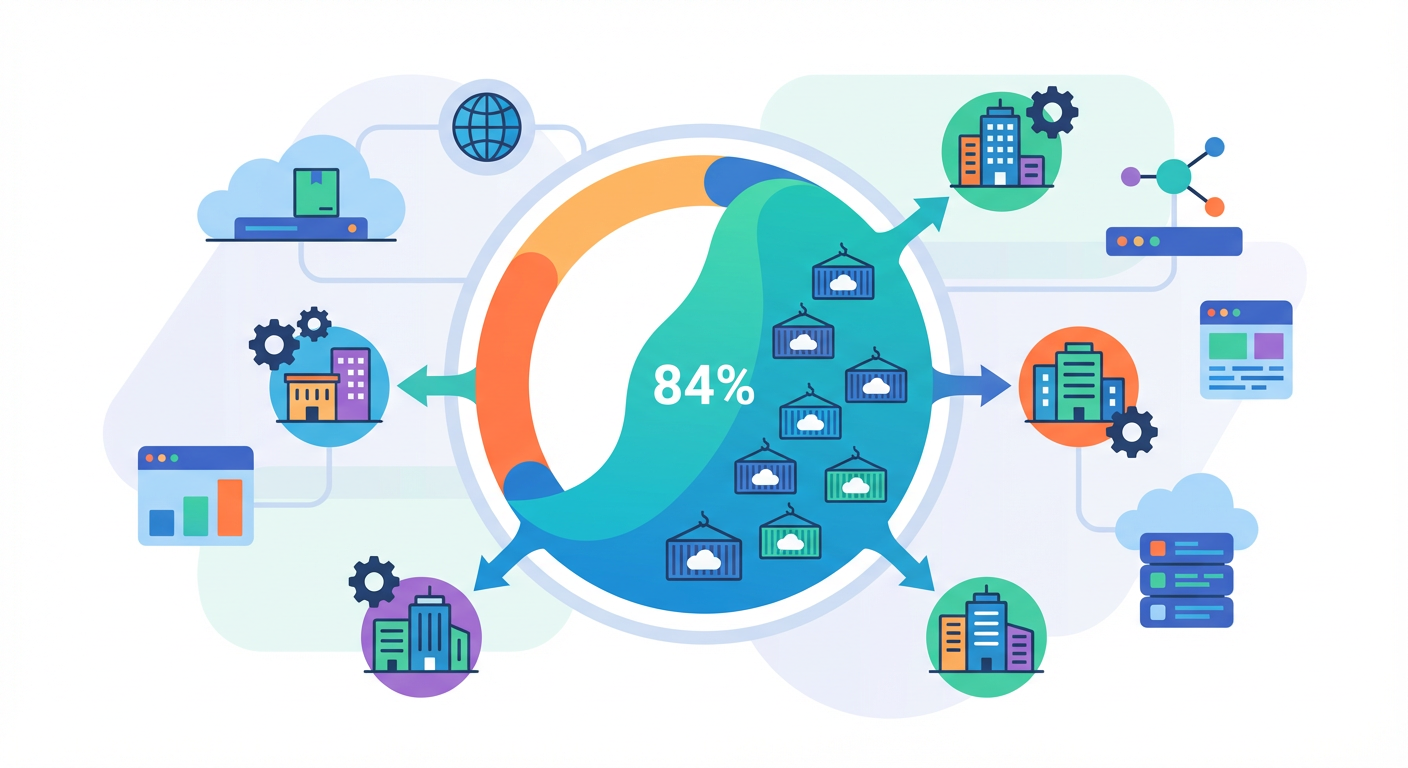
Let’s talk about the elephant in the room. When 84 percent of organizations running containers have standardized on Kubernetes, we’re not looking at healthy competition anymore. We’re looking at market consolidation that honestly makes me uncomfortable as a technologist. This near-universal adoption doesn’t automatically mean Kubernetes is the best solution for every use case.

The complexity overhead of Kubernetes is massive, no matter what the evangelists say. Organizations are trading one set of operational headaches for another, often more complicated set. The Kubernetes documentation runs thousands of pages for good reason. This isn’t simplification. It’s abstraction with a brutal learning curve.
The momentum feels unstoppable. Network effects are real, and the ecosystem naturally gravitates toward the dominant player. But here’s the thing: dominant doesn’t mean optimal. Widespread adoption doesn’t magically eliminate the fundamental architectural trade-offs that many organizations are just starting to understand.
Docker’s Licensing Gambit and Developer Inertia
The Docker Desktop licensing controversy was supposed to shake things up. But developer usage patterns? Remarkably stable. This tells us something important about developer tooling: switching costs often matter more than licensing costs, especially when corporate budgets absorb those fees instead of individual developers.
The licensing controversy made plenty of noise. Alternatives like Podman and containerd got attention. But actual migration numbers tell a different story. Most developers stick with familiar tools until someone forces them to change. Organizations found it easier to pay Docker than retrain their teams.
This pattern reveals a bigger issue in containerization. Tool selection increasingly depends on familiarity and ecosystem lock-in rather than technical merit. When switching costs are high, market leaders can extract more value without delivering proportional improvements. It’s frustrating, but it’s reality.
Platform Engineering: Abstraction or Complexity Theater?
Platform engineering teams are either a necessary evolution or an admission of failure. Depends on how you look at it. These teams are supposed to abstract infrastructure complexity away from application developers. The real question is whether they’re solving the right problem or just moving complexity around.
Platform engineering promises to democratize infrastructure access while maintaining operational standards. In practice, it often creates new bottlenecks and communication overhead between application teams and the underlying infrastructure. Those abstraction layers can become black boxes that hide system behavior instead of clarifying it.
The growth of these specialized teams makes me wonder about organizational efficiency. Are we creating more specialized roles because our tools are too complex? Or are we finally organizing around sustainable operational practices? The answer varies between organizations, but the trend suggests infrastructure complexity has outpaced most teams’ ability to manage it directly.
eBPF and WebAssembly: Signal Through the Noise
Extended Berkeley Packet Filter technology actually deserves attention beyond the typical hype cycle. eBPF’s ability to enable deep observability without code instrumentation is a genuine technical advancement. Operating at the kernel level, it provides insights that traditional monitoring approaches simply can’t match.
But eBPF adoption requires kernel-level expertise that most development teams don’t have. The promise of seamless observability comes with the reality of specialized knowledge requirements. Organizations need to invest in education or hire specialists to get real value from eBPF.
WebAssembly’s expansion beyond browsers into server-side workloads is interesting. The technology offers near-native performance with sandboxed execution, addressing legitimate concerns about security and resource isolation. But WebAssembly also introduces new complexity in toolchain management and debugging workflows.
Both technologies represent real innovations rather than marketing-driven trends. However, adopting them requires careful consideration of organizational capability and genuine need rather than FOMO about the latest developments.
GitOps: From Practice to Orthodoxy
GitOps has achieved something rare: it became standard practice without significant technical controversy. Organizations with mature DevOps cultures have largely adopted Git-centric deployment workflows, and the results generally justify the investment.
The appeal is straightforward. Treating infrastructure and application configuration as code provides versioning, rollback capabilities, and audit trails that traditional deployment methods can’t match. GitOps workflows align naturally with existing developer practices, reducing the mental overhead of deployment management.
But the uniformity of GitOps adoption across mature organizations suggests limited experimentation with alternative approaches. While GitOps solves real problems effectively, the lack of diversity in deployment methodologies might indicate premature convergence on a single pattern. The CNCF landscape shows numerous GitOps implementations, but they largely follow the same fundamental patterns.
GitOps standardization reflects broader maturation in the containerization space, but it also raises questions about whether the industry has adequately explored alternative deployment paradigms. Sometimes consensus emerges from thorough evaluation. Sometimes it emerges from path dependence and risk aversion.
These trends in containerization and platform engineering reflect both genuine technological progress and the natural tendency of complex systems to accumulate layers of abstraction. The challenge for technical decision-makers is distinguishing between solutions that address fundamental problems and those that simply reorganize existing complexity into new configurations. What’s your organization’s experience with these patterns?