The Breach That Rewrote the Rulebook
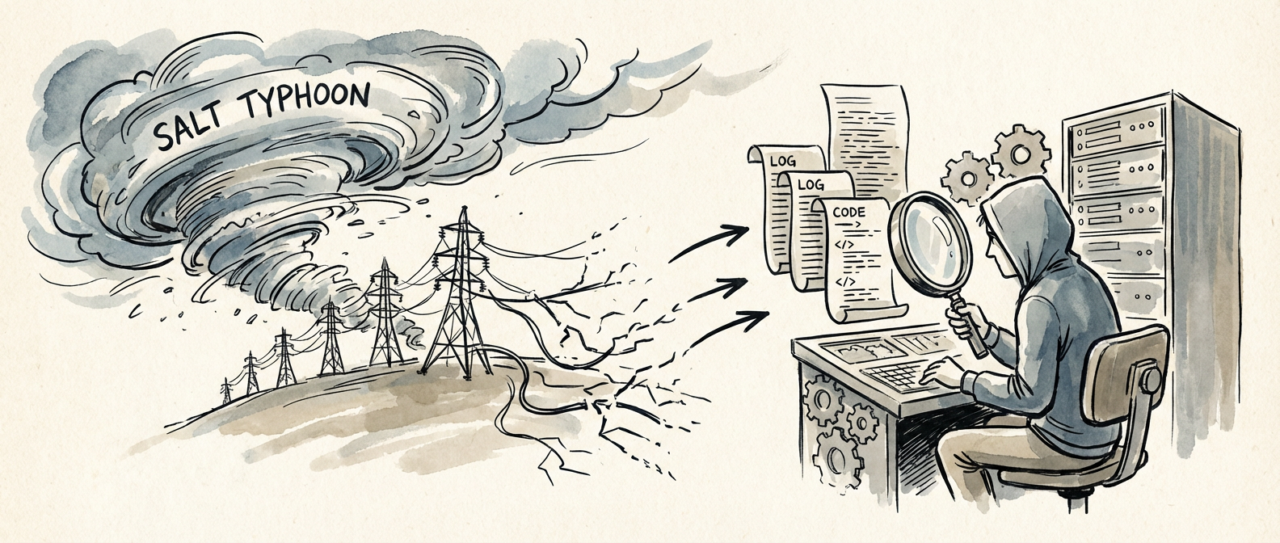
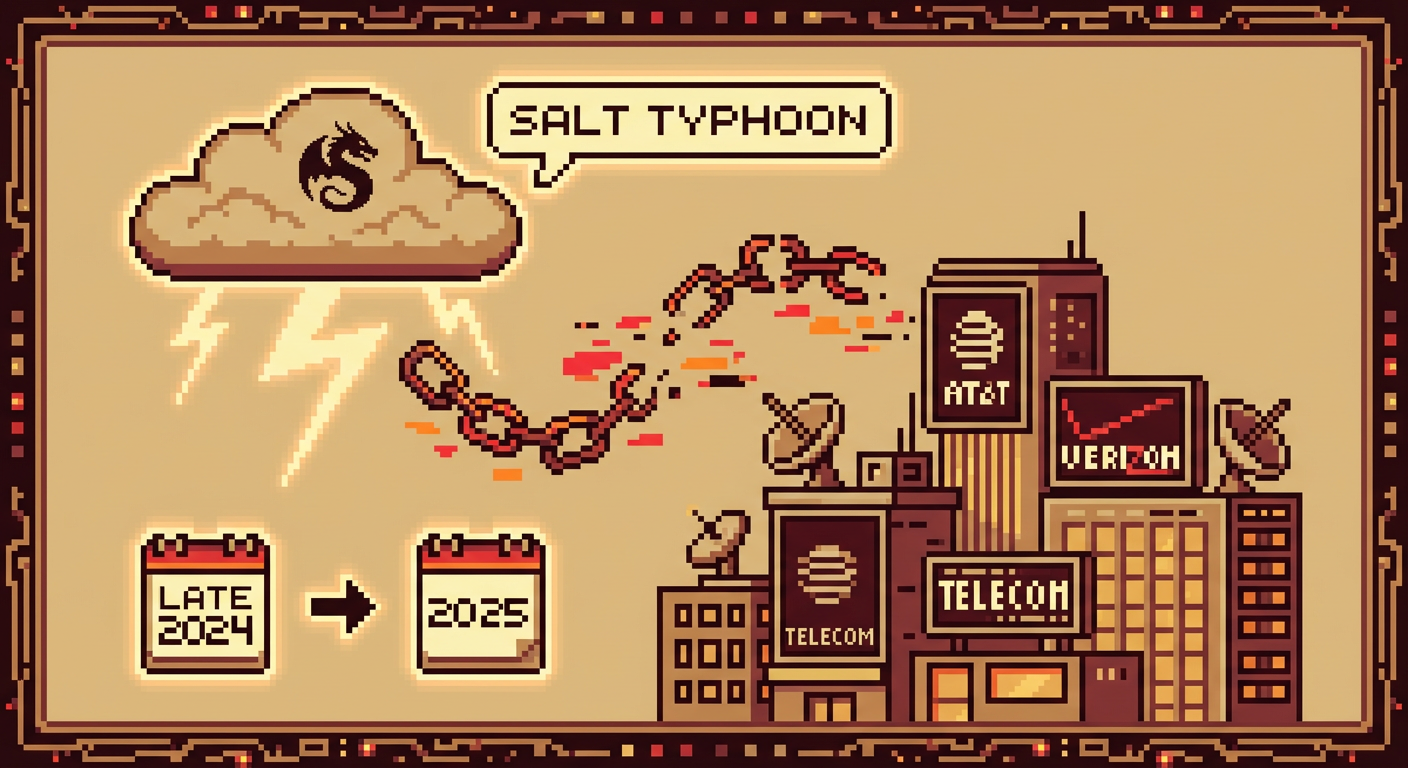
When the FBI and CISA confirmed in late 2024 that Chinese state-sponsored operators had compromised at least nine major US telecommunications providers, including AT&T and Verizon, the industry response was predictable. Statements. Briefings. Promises of “enhanced security measures.” But if you’re a backend engineer who’s actually responsible for keeping systems running, you already know that high-level responses rarely translate into the defensive work that actually stops attackers. What made Salt Typhoon different wasn’t just the scale of the breach. It was where they went once they were inside.
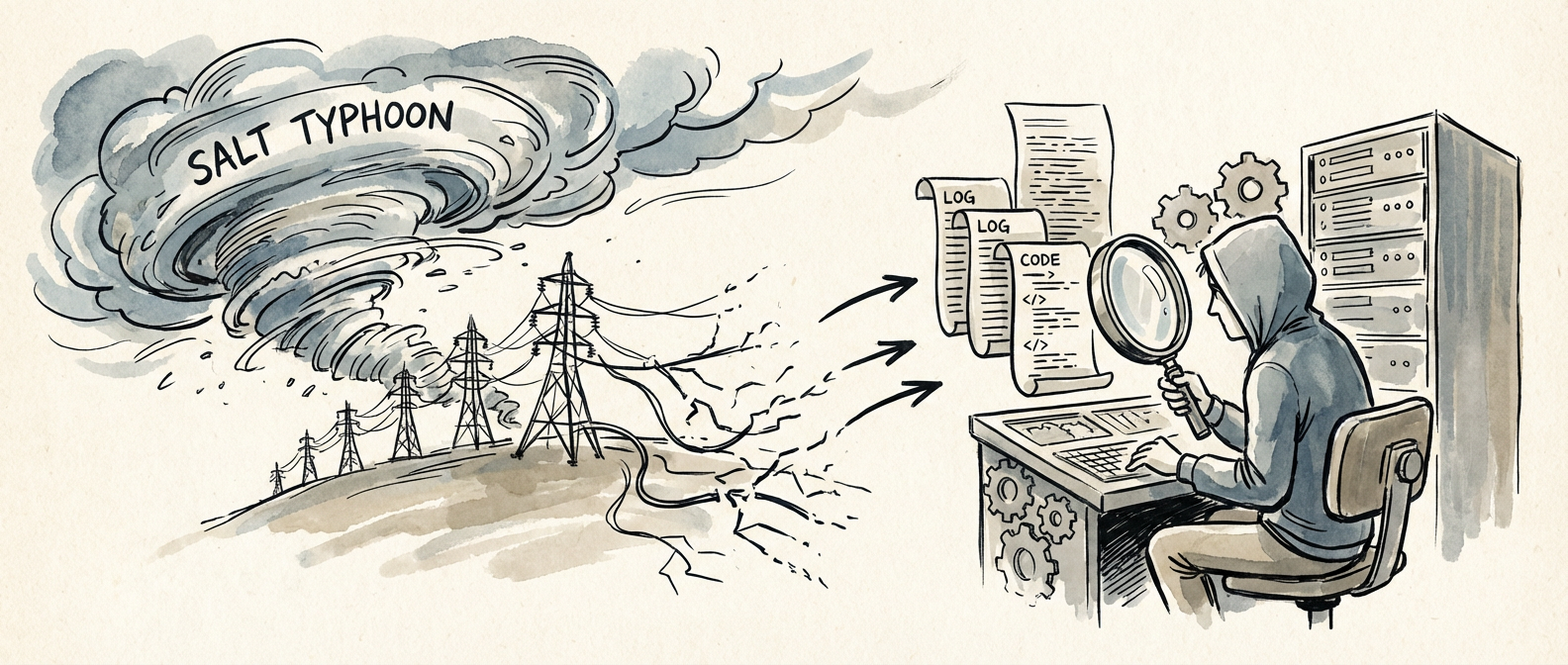
The attackers didn’t stop at perimeter systems or customer data. They went straight for lawful intercept infrastructure, the very systems telecom providers were legally required to build and maintain for law enforcement use. This is the kind of detail that should have kept you up at night. A compliance requirement, intended to help law enforcement, became an active attack surface. The dwell time in several environments exceeded 12 months before detection, according to Mandiant’s forensic work in early 2025. That’s not a breach. That’s an occupation.
Why Your Logging Stack Is Ground Zero
Here’s what separates mature incident response from the kind that gets people fired: understanding that attackers don’t avoid logging systems out of courtesy. They target them. If you can’t see what’s happening in your environment, neither can anyone else, and that’s precisely the condition Salt Typhoon exploited. The group’s extended presence wasn’t due to some exotic zero-day. It was due to environments where logging was sparse, where authentication events weren’t being tracked with sufficient granularity, and where visibility into administrative access was essentially theater.
CISA’s December 2024 advisory on Salt Typhoon included specific recommendations that should become non-negotiable in your environment. Audit your logging configurations. Not once. Not as a checkbox. Continuously. Look at what’s actually being logged versus what you think is being logged. Most teams discover they’re not capturing critical events at all, or they’re capturing them to systems that aren’t being monitored. The second recommendation: enforce network segmentation hard. If an attacker gets into one system, they shouldn’t be able to pivot freely to sensitive infrastructure. Lawful intercept systems, in particular, need isolation. The third: prioritize visibility into authentication events. Every successful login, every failed attempt, every privilege escalation should be something you can query and alert on within minutes.
The Compliance Trap That Caught Everyone
Lawful intercept systems exist because of CALEA, the Communications Assistance for Law Enforcement Act. It’s a 1994 framework designed to ensure law enforcement could perform authorized wiretaps on digital networks. The framework itself isn’t the problem. The problem is that compliance with it became a checkbox exercise rather than a security design principle. You built the system because the law required it. You made it accessible to authorized personnel. You probably didn’t design it with the assumption that an advanced persistent threat would spend months mining it for information about US persons.
What Salt Typhoon demonstrated is that you can’t treat compliance requirements as security theater. If you’re building systems for lawful intercept, those systems need the same rigor you’d apply to your most sensitive internal infrastructure. Stronger. Better segmented. More heavily monitored. The fact that Senator Ron Wyden introduced legislation in early 2025 calling for mandatory security standards for lawful intercept systems tells you that the voluntary framework failed. It failed because companies, including massive telecom carriers, treated it as a regulatory requirement rather than an existential threat vector.
What Your Audit Should Actually Look Like
Start by running an honest inventory of what you’re logging and where those logs are stored. Not the theoretical logging you think you have. The actual logging. Pull your logging configuration from production right now. Check what events trigger log entries. Check your retention periods. Check who has access to those logs. In most organizations, this exercise alone reveals that administrative access to logging systems is far less restricted than anyone imagined. An attacker with the right credentials can delete logs, modify them, or simply avoid triggering them by using legitimate administrative accounts they’ve compromised.
Second, look at your authentication pipeline. Do you have complete visibility into how accounts are provisioned, when privileges are granted, and when they’re revoked? Can you see which accounts have accessed sensitive systems in the last 24 hours? Most backend teams can’t answer that question without doing forensic work. If you can’t answer it in real time, an attacker with persistent access won’t trigger any alerts when they use legitimate credentials to move through your network. The CISA Salt Typhoon advisory and guidance provides specific technical recommendations for infrastructure operators, but the core principle is simple: logging that can’t be queried in real time is mostly theater.
Third, test your segmentation. Actually test it. Don’t assume your network isolation is working because your diagram looks good. Have your security team attempt lateral movement from a compromised system. If they can reach sensitive systems, your segmentation failed. If they can’t, document how you prevented it and replicate that pattern everywhere sensitive data lives.
The Momentum You’re Seeing Now Won’t Last
The FBI and CISA joint statement on telecom compromises was clear about the scope and the threat. But here’s what happens after every major breach: the security industry gets very loud. Conferences dedicate tracks to it. Every vendor launches a product that claims to solve the problem. Then, about six months later, it becomes background noise and teams go back to dealing with the operational demands that actually get funded. I’ve watched it happen after every major incident for the past decade.
The groups that successfully defend against persistent threats treat these breaches as permanent reference points, not temporary emergencies. Build your logging strategy as if an advanced state-sponsored group is already inside your network and actively trying to hide its activity. That’s not paranoia. That’s just looking at what actually happened to nine major US telecom providers.
If you’re working on backend systems that touch authentication, logging, or network access, this is your moment to push for the audit and the infrastructure changes that should have happened years ago. Start with your CTO. Start with your security team. Start somewhere. The alternative is being the organization that doesn’t notice when someone has been inside for 12 months.