The Blue-Green Mirage
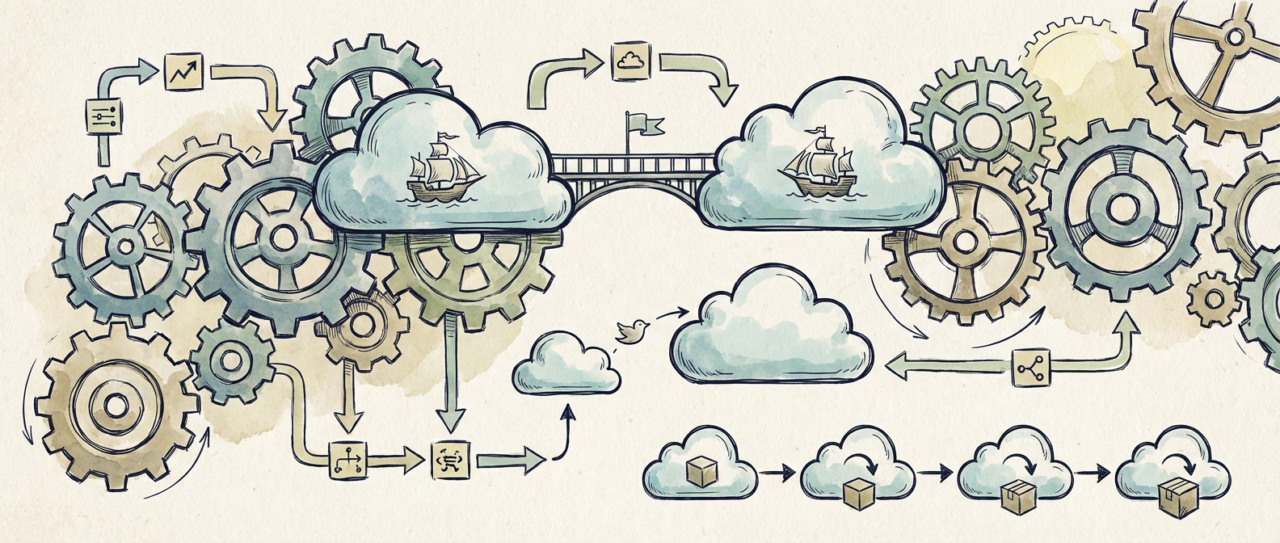
Everyone talks about blue-green deployments like they’re the holy grail. Two identical environments. Switch traffic. Roll back instantly if things go wrong. Sounds perfect until you try to run it at scale with stateful services and realize you need double the infrastructure for everything.
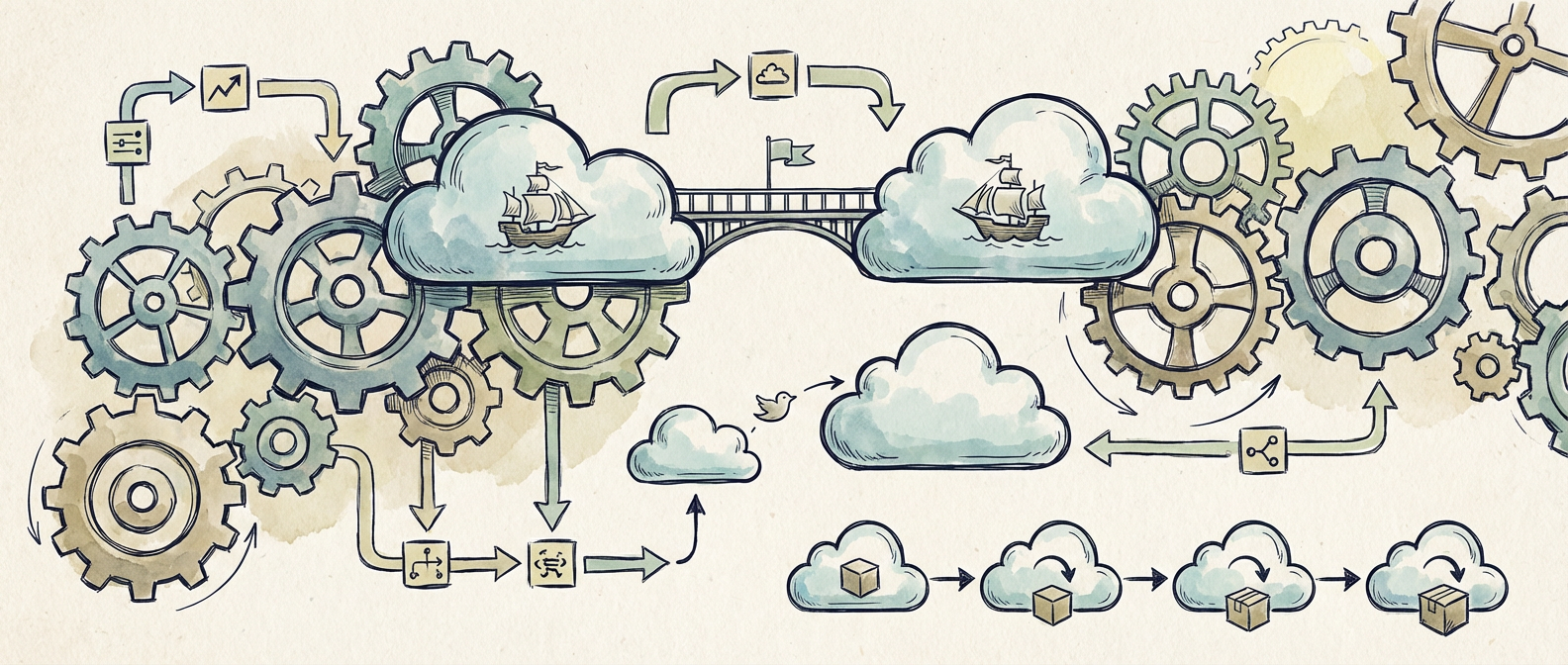
I spent eight months implementing blue-green for a financial services platform. The theory was solid. The reality was brutal. Database migrations became a nightmare. How do you keep two identical databases in sync when one environment is receiving live traffic? We tried replication with a lag, but even a few seconds of delay caused data consistency issues that made our compliance team very unhappy.
The infrastructure costs were eye-watering. We weren’t just doubling compute resources. We needed duplicate storage, duplicate network configurations, duplicate monitoring setups. The monthly AWS bill made our CFO question whether we’d accidentally launched a cryptocurrency mining operation.
Blue-green works beautifully for stateless applications with simple data flows. But if you’re dealing with complex microservices architectures where services talk to each other and maintain state, the coordination overhead will eat you alive. We eventually scaled back to using blue-green only for our most critical user-facing services.

Rolling Deployments: The Pragmatic Choice
Rolling deployments became our bread and butter. Kubernetes makes this almost trivial with proper readiness and liveness probes. You update your deployment spec, and the controller methodically replaces pods one by one. Simple. Reliable. Cost-effective.
The devil lives in the configuration details. We learned to set maxUnavailable to 25% and maxSurge to 50% after watching too many deployments crawl along at one pod per minute. For a service running 20 replicas, this meant we could have up to 5 pods down and 10 extra pods spinning up simultaneously. The math matters when you’re trying to maintain SLA during peak traffic.
Health checks are where most teams stumble. Your readiness probe needs to verify that your service can actually handle requests, not just that the process started. We use a custom endpoint that checks database connectivity, external service dependencies, and cache initialization. A pod that reports ready but can’t fulfill requests will ruin your deployment.
Circuit breakers saved us countless times. When a new version had performance issues, our services would automatically stop routing traffic to degraded pods. The deployment would stall instead of cascading failure across the entire system. We use Hystrix patterns in our Java services and similar logic in our Go applications.
Canary Deployments: When You Need to Sleep at Night
Canary deployments require more orchestration but give you the confidence to ship changes without losing sleep. We route 5% of traffic to the new version and monitor key metrics for 30 minutes. If everything looks good, we gradually increase to 25%, then 50%, then 100%.
Istio made this possible for us, but the learning curve was steep. Traffic splitting, destination rules, virtual services. The YAML configurations look simple until you need to debug why 5.2% of your traffic is going to the canary instead of 5%. We spent weeks fine-tuning the mesh configuration.
Automated rollbacks based on metrics are essential. We monitor error rates, response times, and business-specific metrics like successful payment processing. If any metric crosses a threshold, the deployment automatically rolls back. This happened twice last month when a seemingly innocent library update increased memory usage by 40%.
Feature flags complement canary deployments beautifully. Even if the new code is deployed, you can toggle features off instantly without rolling back the entire deployment. We use LaunchDarkly for this, integrated with our monitoring stack. When a feature causes issues, we can disable it in seconds while keeping the rest of the deployment intact.
The Database Migration Battlefield
Database schema changes are where deployment strategies go to die. You can’t just update your application code and hope the database keeps up. We learned this the hard way during a migration that brought down our primary service for six hours.
Forward compatibility is non-negotiable. Your current application version must work with both the old and new database schemas. This means deploying schema changes first, then updating application code to use new columns or tables. We use Liquibase for Java applications and golang-migrate for our Go services.
Zero-downtime migrations require careful choreography. Adding columns is safe. Renaming or dropping columns requires multiple deployment cycles. First, you add the new column and dual-write to both old and new. Then you update application code to read from the new column. Finally, you drop the old column in a later release.
We maintain separate migration pipelines for schema changes and application deployments. Database migrations run first during maintenance windows when traffic is low. Application deployments happen during business hours when we can monitor the impact. This separation has prevented more outages than I can count.
Lessons from Five Years of Production Deployments
Monitoring and observability matter more than the deployment strategy itself. You need to know immediately when something goes wrong. We use Prometheus for metrics, Jaeger for distributed tracing, and structured logging with correlation IDs. The three-signal approach works: metrics tell you what’s broken, logs tell you why, and traces tell you where.
Rollback speed determines your sleep quality. We can roll back any service in under two minutes because we keep the previous three versions readily available. Container images are tagged with git commit hashes and stored in our private registry. The rollback process is automated through our CI/CD pipeline.
Cultural changes matter as much as technical ones. We adopted blameless post-mortems and transparent communication about deployment issues. Teams share learnings across the organization. When the payments team discovered that connection pooling settings caused issues during deployments, every other team updated their configurations proactively.
Production deployment strategies aren’t solved problems you implement once. They’re evolving practices that adapt to your specific constraints, risk tolerance, and organizational maturity. The best strategy is the one your team can execute reliably under pressure. What deployment challenges are you facing in your environment? I’d be curious to hear how you’ve adapted these patterns to your specific context.